make a explanation of rukun2 wudhu

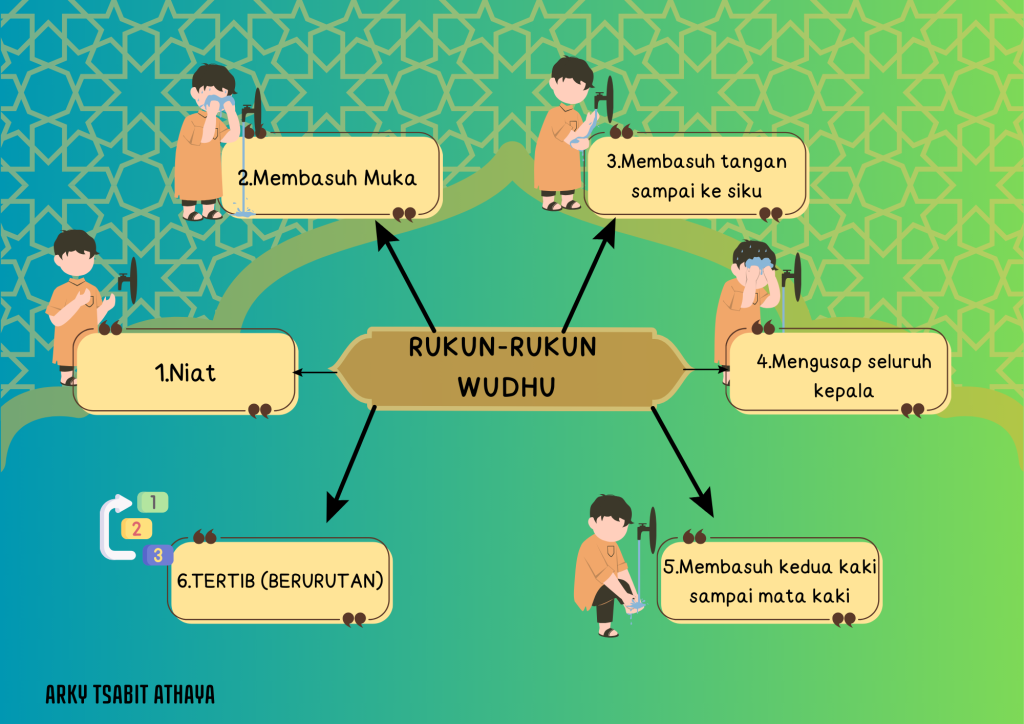
Rukun-Rukun Wudhu refers to the essential actions that must be performed correctly during wudu (ablution) in order for it to be valid in Islam. These are the fundamental steps that ensure the purification process is done properly before performing acts of worship, such as prayer. Below is an explanation of the six main rukun wudhu (pillars of wudu):
Niat is the intention in the heart to perform wudu for the sake of purification before engaging in acts of worship like prayer. Although this does not need to be spoken aloud, it must be a conscious decision to purify oneself.
Purpose: Without intention, the wudu is not valid. The intention is an essential step to demonstrate your awareness of purification.
The face must be washed from the forehead to the chin, and from ear to ear.
Purpose: Washing the face ensures cleanliness, as the face is a prominent part of the body that is often exposed.
Both hands, including the forearms, must be washed from the fingertips to the elbows. This is done for both the right and left hands.
Purpose: The hands are used in various tasks, so cleaning them up to the elbows ensures purity before performing acts of worship.
Wet hands are used to wipe part of the head, typically the forehead, with the intention of purification. A light touch on the head is enough.
Purpose: This step is symbolic of ensuring that the mind (symbolized by the head) is also purified.
Both feet must be washed thoroughly, up to the ankles, including between the toes.
Purpose: Feet are also essential in daily activities and must be cleansed as part of the physical purification.
The steps of wudu must be performed in the correct order: niat, washing the face, washing the arms, wiping the head, washing the feet.
Purpose: Performing the actions in the correct sequence is crucial for the validity of the wudu. Skipping or rearranging the steps may invalidate the process.